Part One
Visiting versus living in a country will have you seeing the country in a different Light. As a visitor, the experience is more or so focused on seeing the sights, trying the local cuisine, and engaging in activities. The interactions with the local culture, people and environment are often more superficial and limited.
In contrast, living in a place involves a deeper, more immersive experience. Residents have to navigate the day-to-day practical aspects of life and integrate into the local community. They develop a deeper understanding of the local customs, language, and way of life.
My first experience in Japan was that of a tourist, before I officially became a resident. Six months prior to relocating, I knew next to nothing about Japan. Now it's safe to say that Japan has taken me by surprise; from its unique well-preserved culture that has been well integrated into its modern society to its wide variety of foods, amazing infrastructure, advanced technology and beautiful landscapes.
This is a series of my life in Japan.
Culture shocks in Japan
Moving to a new environment different from your own will inevitably lead to culture shock. Japan is different from my home country in so many aspects, so you can imagine the number of culture shocks I`ve encountered.
Bowing
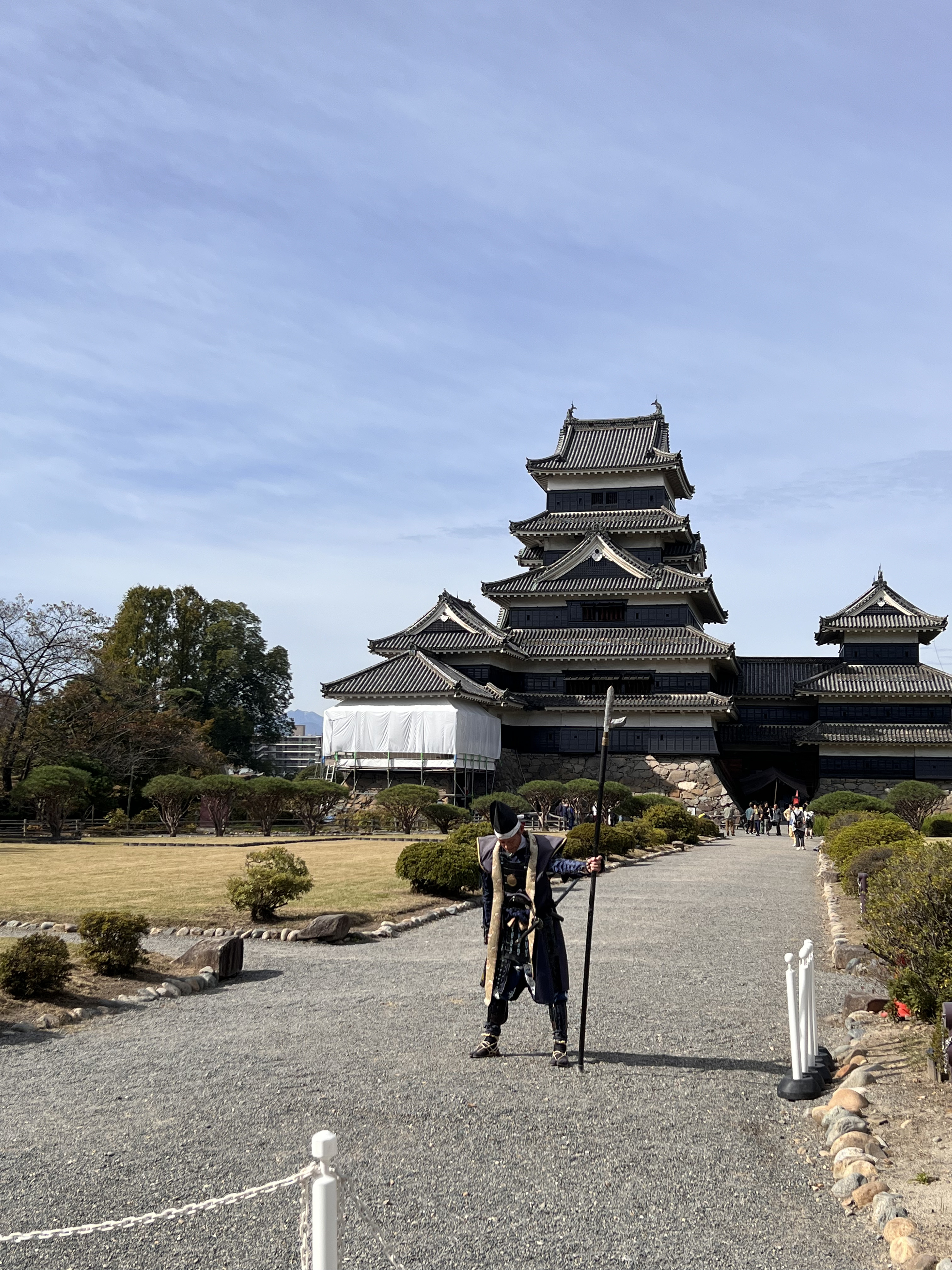
I heard that people in Japan bow, but I wasn`t aware how frequent, to what extent and how it is deeply ingrained in their culture as well as day-to-day lives. Bowing is a sign of respect, gratitude or apology and the degree of the bow depends on the circumstance or hierarchy of the individual being addressed. In a formal situation where you are addressing your seniors or business partners, a bow of about 30 degrees is more appropriate, but in a casual situation where you are addressing your friends, a slight tilt of the head is acceptable. Greetings are usually followed by a bow, and coming from a country where people primarily hug or handshake, it was a little odd at first. Up until now, I get confused whether I should bow or handshake my non-Japanese friends.
Once you start bowing, you never stop. It becomes muscle memory or you rather end up doing it subconsciously. I find myself bowing even when I travel outside Japan, and this always leaves the other person puzzled. Nobody would force you to bow but not doing it can be seen as rude. There are a lot of unspoken rules in Japan that you just have to find out for yourself or do some research so as not to come off as culturally insensitive. When it comes to apologizing, there is a special kind of bow called dogeza. A bad offense might require you to bow all the way to the ground. There are even professional apologizers for hire. That's how serious they are at apologizing!
When saying goodbye to a guest or customer, it is polite to bow. I have seen the staff members working at a bus station bow as the bus is departing, airport workers do it too when the airplane is taking off.
When saying goodbye at a guest who just entered the elevator, you are supposed to bow and hold your posture until the elevator door closes. This reminds me of an awkward incident on my first few weeks in Japan. I was in an elevator when the door opened and some guy walked in. Outside the elevator was a girl who had escorted the guy, and she was bowing right in front of the elevator. I immediately thought that she too wanted to get in so I decided to do the right thing and press the button that keeps the elevator door open. However, the girl wasn't getting in but she was rather bowing lower and lower. I found this very strange and it was beginning to get awkward until the guy Quickly pushed the button to close the elevator door.
Social etiquette
In Tokyo, People stand on the left hand-side of the escalator, to let those people in a hurry to walk up on the right hand-side. Never stand in the way of a salary man who is rushing to catch the train. People keep to the left-hand side on the sidewalks too. However, this left-hand rule doesn't apply to the Kansai region, they keep to the right-hand side instead. I was surprised by the differences between the Kanto and Kansai region, there appears to be some rivalry between these two regions which dates back into history.
It is also very rude to cut a line. Most people will in fact be pleased to let you pass if you seem to be in a hurry. I noticed that there is usually a subtle competition of who is more polite than the other. Often times the other person will bow and offer you to go ahead of them, dozo!
I was surprised at the length the locals would go to help a stranger who is lost. You've probably heard stories of Japanese people escorting a lost stranger all the way to their destination, I'm here to confirm that this is true!
There is a number of times I’ve asked for directions and the person has willingly gone out of their way to direct me. This particular incident stands out. I was running some errands and needed to hop on a bus, but I wasn't sure which particular bus to catch. I decided to hop on the one I thought was right and tried to ask the bus driver if I was on the right bus based on my intended address. This was a big mistake because the bus driver didn't understand English nor did I understand Japanese. To make matters worse, I was holding up the line to enter the bus. Some nice Japanese lady who spoke a little bit of English decided to intervene when she saw the confusion. Upon checking my address, she appeared unsure of whether I was in the right bus so she told me this wasn't the bus.
I quickly got off the bus, and after a few minutes of analyzing my google maps instructions, I concluded that I was in fact in the right bus earlier. I waited for the next bus which came in about 15 minutes. I finally got to my destination and as I was getting off the bus, I noticed a lady who was waiting at the bus stop walk towards me. To my surprise, it was the lady who told me I was on the wrong bus earlier! She seemed distressed and immediately apologized for giving me the wrong information. Before I could say anything, she had pulled out google maps on her phone and asked me to follow her. I was a bit shocked and confused, but I complied. She indeed walked with me for a few minutes until my destination was in sight. Up until this day I ask myself, how did she know I would eventually get on that bus and how long was she going to stand there and wait for me?
Public Transport etiquette
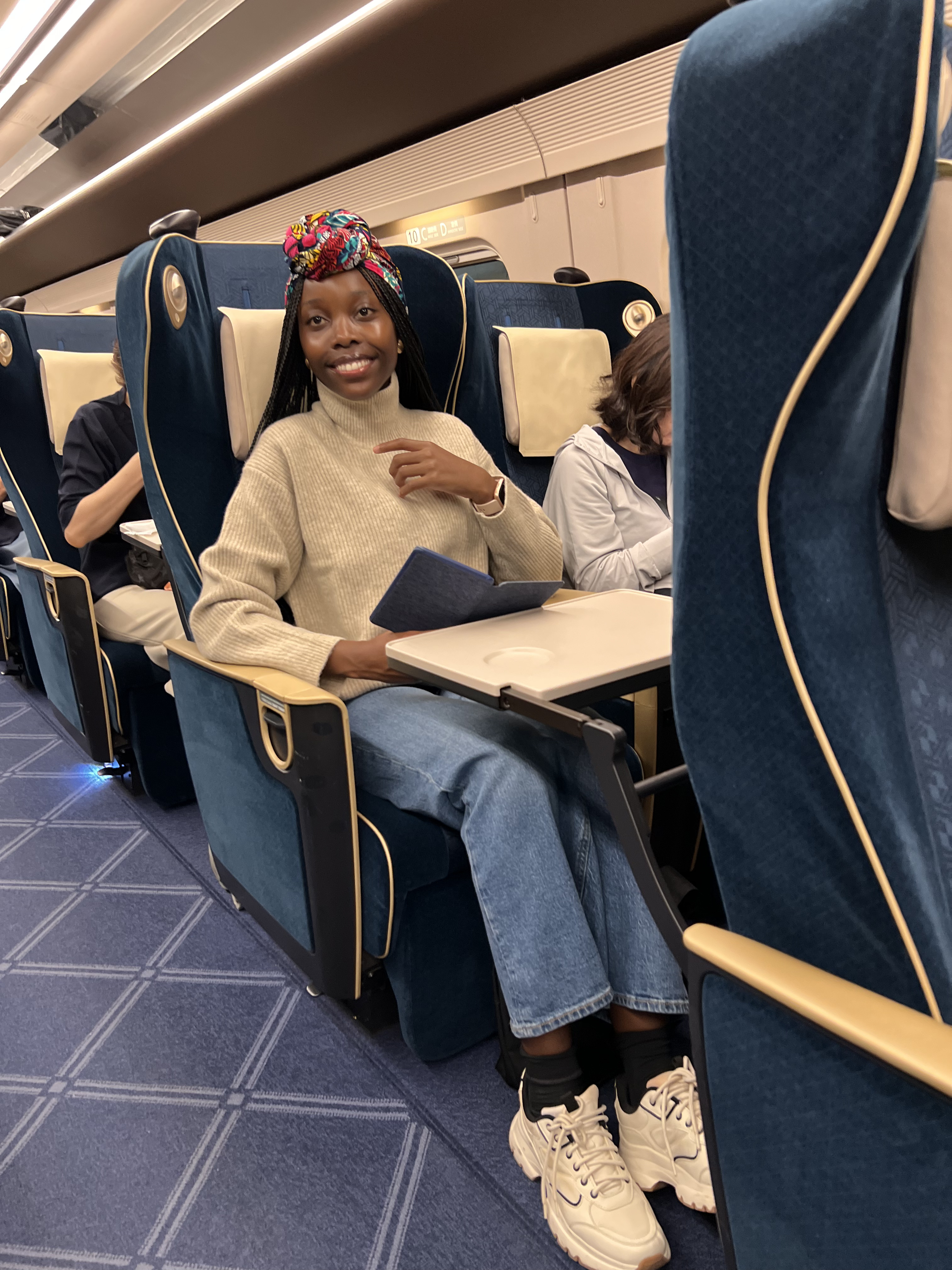
Conversing in trains or buses is frowned upon, talking on the phone is even worse. You will often hear a voice on the intercom telling people to refrain from talking on the phone. I’ve also seen sign posts in elevators asking people to be quiet. This is a big contrast to my home country where public transport vehicles called matatus are fitted with speakers and TVs that play loud music you’d think you are in a club (check out matatus culture here). I’ve also seen sign posts in elevators asking people to be quiet.
There is this unspoken rule of not staring at people in trains. Staring is considered to be rude, so you will find most people are either on their phones or close their eyes for some rest. I also noticed that people on the streets rarely maintain eye contact and most people like to keep a distance, personal space is highly valued here, or perhaps the people here are too shy?
The Japanese society is very considerate of the next person, so if something seems to be inconsiderate of others, best believe it is against the social norms to do it.
Language
Another culture shock is the fact that English is hardly spoken here. While I understand that English is not spoken in every country, my experience in traveling to non-English-speaking countries is that you can get by with some little English here and there, but that is not the case in Japan. In fact, if it were not for language translating apps, I don't think I would be able to live in Japan. In your day-to-day life, it is highly unlikely to come across English speaking Japanese people, and even if they understand a little English, they are too shy to attempt. This puts a lot of pressure to learn the language as fast as possible. It can become a challenge to receive services in any sector if you are not familiar with Japanese. All the sign posts across the country are in Japanese with very few having an English translation, so this means having to use language translating apps everywhere you go. Going to the supermarket to shop is very stressful because all the labels are in Japanese. Keep in mind that when it comes to translating language using translating apps, some meanings tend to get lost in translation. In every institution you go, be it banks, hospitals or government offices, all paperwork is filled in Japanese. If you can't speak the language, writing it becomes more difficult considering Japanese has three systems of writing: Hiragana, Katakana and Kanji with the Kanji having over a thousand characters.
Most Japanese people will avoid you like the plague if they don`t speak English well. I was told they are shy and embarrassed to speak broken English. I used to think this was ridiculous until I found myself avoiding conversing in Japanese for fear of speaking broken Japanese. I guess we are not so different after all.
Climate shock
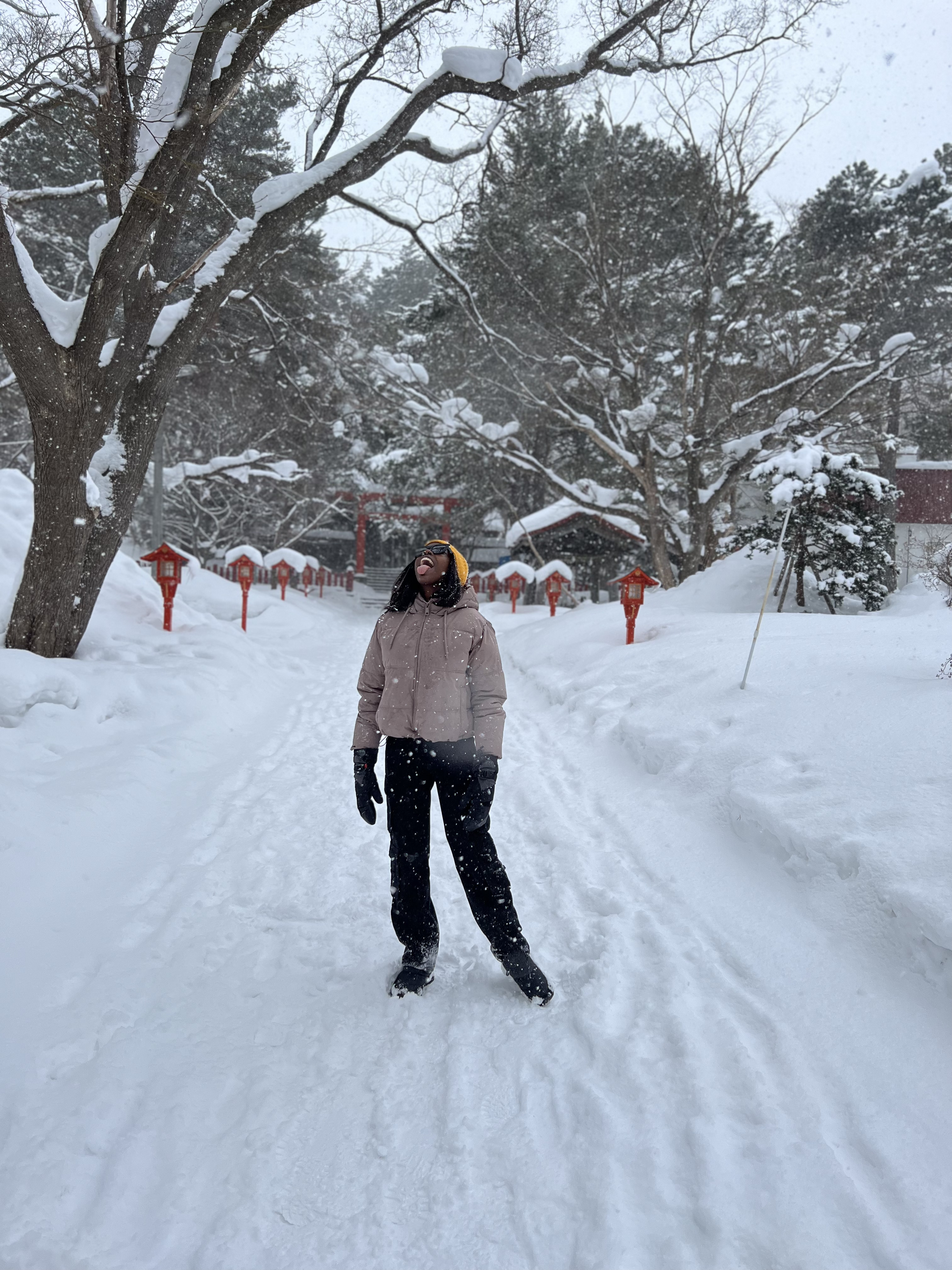
If I am to pin-point my biggest shock of all, it has to be climate shock. My home country Kenya lies on the equator, a factor that ensures we get mild and stable weather conditions throughout the year. We only have two seasons, the rainy and sunny season. Coming to Japan where they experience the four seasons has been quite the experience for me. I remember going up to Hokkaido in March, towards the end of winter, and thinking that my light pair of gloves and winter jacket would do the trick. I ended up freezing to the point my fingers and toes were painful, it felt like “burning” in ice. I remember walking on the streets of Sapporo at night and having to duck into buildings to rub my hands and feet to prevent frost bites. I ended up wearing two jackets with a winter jacket on top, winter gloves inside winter mittens and three socks with winter boots plus a beanie and a winter scarf, that's how bad it got. It was my first time experiencing temperatures below 0 degrees.
Seeing trees without leaves was also bizarre. I'm used to seeing trees with leaves throughout the year, and a tree without leaves seems dead to me. During spring, watching the flowers bloom all of a sudden and the leaves grow back on the trees was even more bizarre! It was like the earth was raising from the dead. I now understand why the topic about weather is such a common conversation starter in such countries because of how dramatic it is.
I experienced my first summer in Japan and I wasn't aware the temperatures could go up to 37 degrees Celsius! It was also very humid which made it feel hotter than it was. It felt like being inside an oven. Going outside was unbearable and standing for one minute in that heat would have me drenched in sweat from head to toe. It was interesting to see a lot of women carrying parasols to protect themselves from the sun. Some even went a notch hire and wore pieces of clothing specifically meant to cover the arms, legs and neck from the sun. An extreme case I saw was of a woman who was wearing a clothing that covered her entire face plus a hat and sunglasses. I was also influenced and would carry an umbrella to protect myself from the scorching sun, it helped a lot. On top of that, I would carry a portable mini fan and wet wipes that claimed to be −3 degrees Celsius.
Doing any activity outside during summer seemed impossible. I remember playing tennis outside when it was 35 degrees Celsius and nearly got a heat stroke, never doing that again.
When fall came, the temperatures dropped drastically from over 30 degrees to mid-twenties degrees. This transition happened within 24 hours, on the day of the equinox, I`m still left processing how all these is even possible.
Food
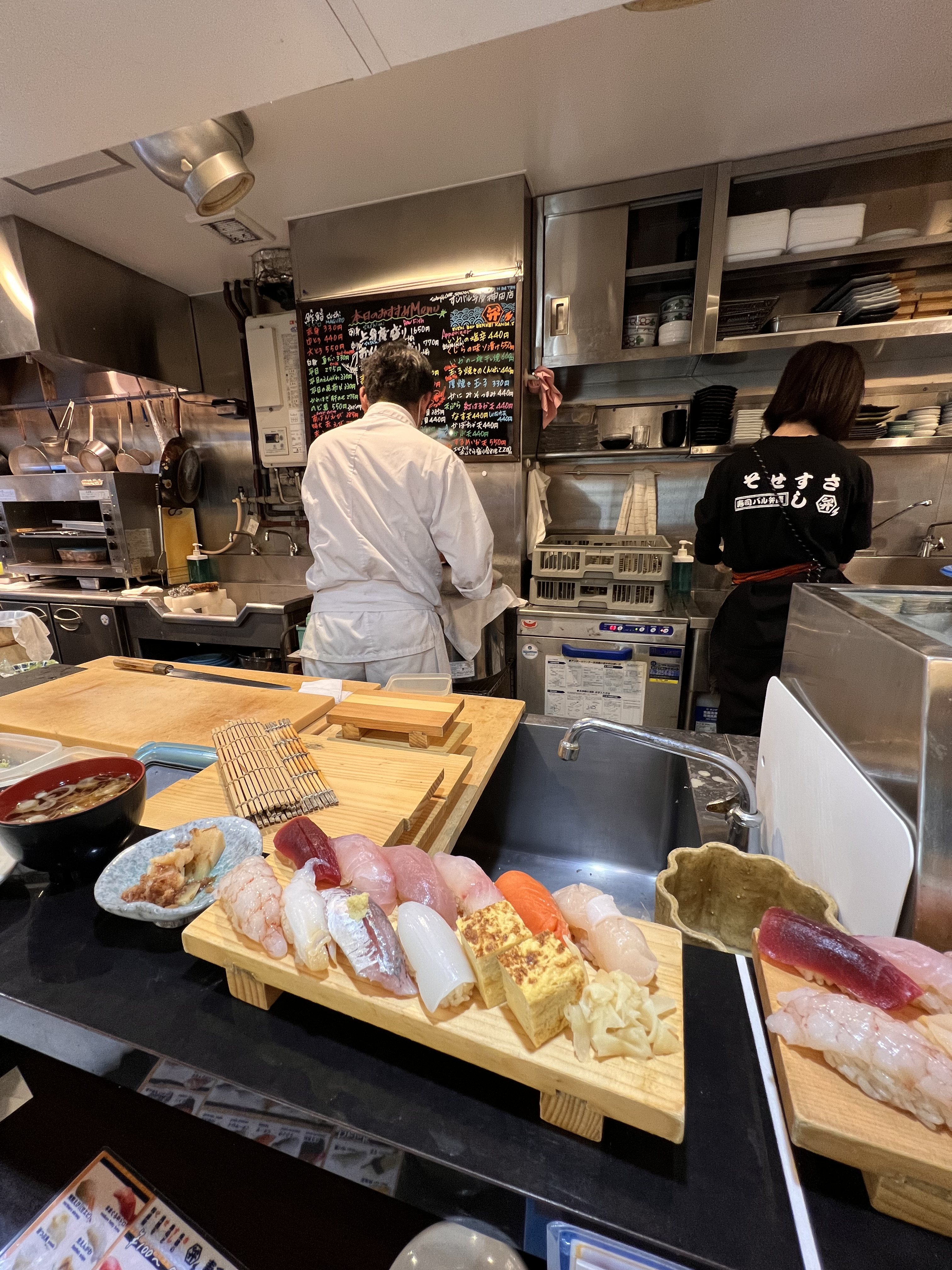
Before coming to Japan, I had only tried sushi and ramen. On coming here, I was surprised as to how different the sushi and ramen here taste like compared to that in my home country. What I thought to be sushi was actually not the standard sushi but the norimaki rolls, I had to adjust my palette to the sushi here. The cuisine here is also very wide. I was surprised that sushi and ramen are not so often consumed by the locals like I thought, they are more of foods consumed on special occasions. There are so many varieties of foods and each prefecture has got its own unique dishes. My friends back home gasp when I tell them we eat stuff like raw fish and raw eggs, which is perfectly fine. To be honest, I was not the biggest fan of fish because it is not so heavily consumed in my home country compared to beef, but now I have grown to like different types of fish like shrimp, prawns and tuna.
I was surprised that Japan has one of the best beef in the world. Their beef called 'wagyu' certainly tastes different to the beef back home. I have gone to Japanese barbecue called 'Yakiniku', and the type of meat served is so soft it melts in your mouth, certainly the best beef I've ever had in my life. My current favorite dishes include Tantamen, Udon noodles, Miso Ramen, shrimp sushi, Norimaki rolls, Omurice, Katsudon, Tempura, Tuna Mayonnaise Onigiri, Gyoza, Dango, Miso soup, Soba noodles, Yakiniku, Okonomiyaki, Takoyaki and Natto. I am yet to explore more foods. The Japanese pay attention to detail when it comes to making food, so most restaurants you go to, you are assured of some really delicious food.